


GEORGE ORWELL: An Appreciation


The new animated film adaptation of George Orwell's Animal Farm (directed by Andy Serkis and featuring the voices of Seth Rogen, Woody Harrelson, Glenn Close and Kieran Culkin) is an absolute train wreck and should be avoided at all costs, especially if you're a true fan of Orwell's...like I am.
Okay, so here’s the thing about George Orwell (and yeah, I know, everybody throws that name around like they’ve actually read him, like they didn’t just pick up Nineteen Eighty-Four in high school and skim it between naps) but Orwell is one of those guys whose shadow is so massive that it’s almost impossible to separate the man from the myth.
It is impossible to separate the books from the buzzwords, and the actual human being from all the stuff that’s become part of our everyday vocabulary.
I mean, “Big Brother,” “Thought Police,” “doublethink,” “Room 101," these are phrases people use casually now, like they’re ordering a cup of coffee, and they all came out of the brain of this guy Eric Arthur Blair, who decided, “You know what, I’m gonna write under the name George Orwell,” and then proceeded to change the way we talk about politics, power, and control forever.
Not bad for a guy who died at 43, coughing his lungs out from tuberculosis.
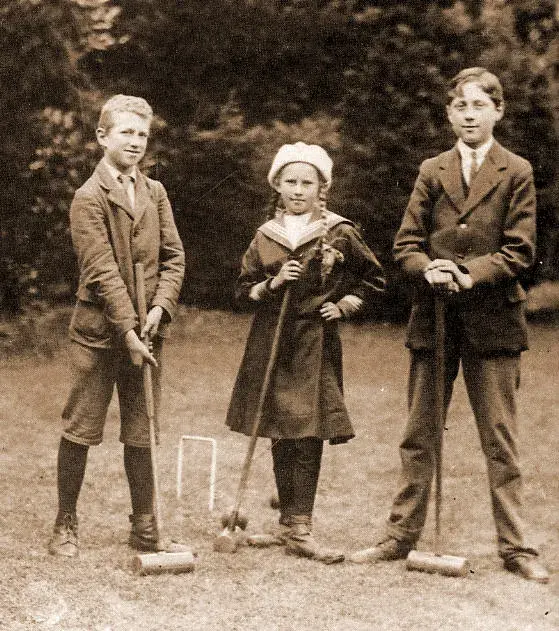
So let’s rewind a little, because the life is just as fascinating as the work, and in Orwell’s case, the life fuels everything. Born in 1903 in British India, Eric Arthur Blair grows up, ends up at Eton, but instead of going the typical route, university and all that, he does something kind of unexpected and joins the Indian Imperial Police in Burma in the early 1920s.
Now, that experience? That’s not just a line on a résumé. That’s the seed for everything that comes later. He sees firsthand what imperialism looks like on the ground (the oppression, the hypocrisy, the moral rot) and it sticks with him.
You read something like his essay “Shooting an Elephant,” and you can feel the guilt and the anger just bleeding through the page.
He bails on that life, comes back to Europe, and then he basically decides to live poor. Not accidentally. On purpose. He’s washing dishes in Paris, sleeping in flop houses in London, just immersing himself in poverty, and out of that comes Down and Out in Paris and London.
That’s where the name George Orwell shows up, and right away, you’ve got this voice, it is clear, direct, no nonsense, no pretension. Lucid prose, they call it, and yeah, that’s exactly what it is. No fluff. Just truth, as he sees it.
And then comes the political awakening, the real, boots-on-the-ground stuff. 1937, Spanish Civil War. Orwell goes over there, not as an observer, not as a journalist sitting comfortably in a hotel, but as a soldier fighting for the Republican side against Franco.
He joins the POUM militia, gets shot in the throat (yeah, that’ll wake you up) and what he sees there, the infighting, the propaganda, the betrayals within the left itself, that’s what really locks in his lifelong hatred of totalitarianism. Not just fascism, but authoritarian communism too.
That nuance is important, and it’s something people tend to gloss over. He wasn’t picking a team blindly; he was calling out power wherever it corrupted.
That experience turns into Homage to Catalonia, which is one of the great war memoirs, and from there, Orwell just keeps sharpening that blade. You get The Road to Wigan Pier, where he documents working-class life in industrial England, and it’s not romanticized. It’s dirty, it’s bleak, it’s real.
He’s always circling the same ideas: class, power, truth, language, manipulation.
Then World War II hits, and Orwell ends up working for the BBC Eastern Service. Now, think about that for a second...this guy who is obsessed with truth and suspicious of propaganda is literally producing wartime broadcasts.
That tension is fascinating. He later becomes a literary editor, continues writing essays (brilliant essays, by the way, about language, politics, culture) and all of it is building toward the two big ones, the ones everybody knows, even if they haven’t actually read them.

First, Animal Farm in 1945. On the surface, yeah, it’s a bunch of animals on a farm. Cute, right? Except it’s not. It’s a razor-sharp allegory about the Russian Revolution and the corruption of socialist ideals into Stalinist tyranny.
And here’s a wild little piece of trivia: the 1954 animated adaptation of Animal Farm, which is terrific in its own way, was actually funded by the CIA as Cold War propaganda. You can’t make that up. Orwell writes a critique of authoritarianism, and then it gets turned into a tool of political messaging. It’s almost too perfect.

Then comes Nineteen Eighty-Four in 1949, written while Orwell is literally dying of tuberculosis. This is a guy in agony, racing against time, and what he produces is one of the most terrifying visions of the future ever put on paper.
Total surveillance, manipulation of truth, language as a weapon. Newspeak, the memory hole, Big Brother watching your every move. It’s all there, and it’s all terrifyingly plausible. And again, this is where those words enter the culture. “Orwellian” becomes shorthand for a whole way of describing the world.
He dies in 1950, just months after the book is published. Forty-three years old. That’s it. That’s the entire run. And yet, the influence? Massive.
The Times names him the second-greatest British writer since 1945. His ideas are baked into how we talk about politics, media, even technology now.
And of course, Hollywood and television (because they always come calling when something this powerful hits the culture) have been adapting Orwell’s work for decades, sometimes brilliantly, sometimes…not so much, but always with that core material looming over everything.
Let’s start with Nineteen Eighty-Four, because that’s the big one. The 1984 film version, directed by Michael Radford and starring John Hurt as Winston Smith and Richard Burton as O’Brien, this is the one people point to as the definitive adaptation.
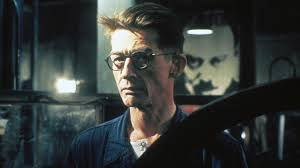
And there’s this incredible bit of symmetry: it was actually filmed in London during the year 1984, using the exact dates mentioned in the novel for certain scenes. That’s commitment. Hurt is phenomenal (fragile, haunted) and Burton, in one of his last roles, brings this chilling authority to O’Brien.
Before that, you’ve got the 1956 film version, starring Edmond O’Brien and Donald Pleasence. It’s a little more conventional, a little more of its time, but still effective.

And even earlier, television was already getting in on it. The BBC did a live adaptation in 1954 with Peter Cushing as Winston Smith (yeah, my man, Peter Cushing!) and it caused quite a stir.
There’s also the 1953 CBS Studio One version starring Eddie Albert, which brought Orwell’s nightmare into American living rooms. And then there are the lost BBC versions from 1965, which, like so much early television, have just vanished into the ether.
You even get more recent attempts, like a 2023 adaptation, and a bunch of projects that never quite made it (Paul Greengrass was attached to a version at one point, there were rumors about a Kristen Stewart-led take) none of it materialized.
Which is kind of fitting. Nineteen Eighty-Four is one of those books that’s almost too big to nail perfectly on screen.

Then there’s Animal Farm. The 1954 animated film, as I mentioned, is historically fascinating because of its CIA backing, but it’s also just a solid piece of animation, especially for its time.
Then you’ve got the 1999 live-action TV movie, with voice work from Patrick Stewart and Ian Holm, which leans more into the fable aspect but still carries that dark edge.
Orwell’s other works have made their way to the screen too, though they don’t get nearly as much attention.

Keep the Aspidistra Flying was adapted into the 1997 film A Merry War, starring Helena Bonham Carter and Richard E. Grant, and it’s this oddball romantic comedy with a satirical bite, very much in line with Orwell’s disdain for materialism.
There are also documentaries and more experimental takes (Orwell’s England in 1985, 1984: A Personal View of Orwell in 1983) stuff that digs into the man and his ideas rather than just the narratives.

And then you get the ripple effects, the unofficial adaptations. Terry Gilliam’s Brazil from 1985 is basically a spiritual cousin to Nineteen Eighty-Four, with its bureaucratic nightmare world and dark absurdity. You can feel Orwell’s fingerprints all over it.
Radio adaptations? Tons of them. BBC productions in 1965 and 2005, among others.
There’s even a 2005 operatic version of Nineteen Eighty-Four directed by Lorin Maazel, which is about as far from the original medium as you can get, but hey, the story holds up.
And the influence keeps going. There’s a video game adaptation of Animal Farm from 2020, and, of course, the awful new animated film that's in theaters now. Orwell just doesn’t go away. He can’t.

The world keeps giving his work new relevance, which is both a testament to his brilliance and, frankly, a little depressing.
Because here’s the bottom line: Orwell wasn’t just telling stories. He was warning us. About power, about language, about how easily truth can be twisted and reality reshaped.
And the fact that we’re still adapting his work, still referencing his ideas, still using his words to describe what’s happening around us...it means he got it right. Maybe too right.
And yeah, you can sit there and admire the prose, the structure, the allegory, all that academic stuff, and it’s all valid.
But for me, it’s the feeling that sticks. That creeping, uneasy sense that what Orwell imagined isn’t some distant nightmare. It’s always right there, lurking, waiting, adapting itself just like those movies and TV shows do.
That’s why George Orwell matters. Not just as a writer, not just as a historical figure, but as a voice that refuses to shut up, even decades after his death. And honestly? Good. Because we probably need that voice now more than ever.
Thanks for reading, and please SUBSCRIBE to my weekly NEWSLETTER!

