


Wes Craven: RANKED
- Nick Digilio

- Mar 10
- 9 min read
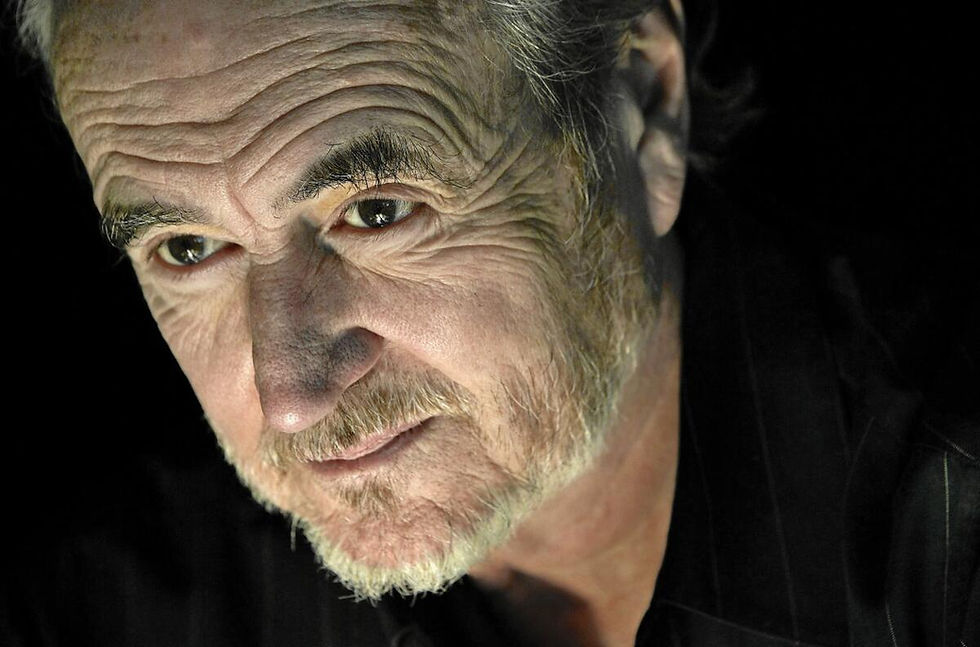
So with Scream 7 in theaters, I thought, okay… this is the moment. Not to talk about whatever corporate committee is keeping Ghostface on life support like a horror franchise CPR dummy, but to talk about the guy.
The guy who mattered. The guy who actually had a brain, a point of view, a sense of humor, and a real filmmaker’s instinct for how to scare you and also how to mess with you while he’s scaring you.
Wes Craven. The real deal. The master. And yes, before anybody gets mad, I’m saying it again: the last couple of Scream movies without him have been pretty bad, and that’s putting it nicely.
So if we’re going to be in another “new Scream” cycle, I want to bring the conversation back to the source, back to the guy who helped redefine modern horror twice, maybe three times, and did it while looking like a mild-mannered professor who might hand you a syllabus and then, ten minutes later, show you the darkest corner of the human brain.
Because that’s the thing about Craven that still knocks me out. He wasn’t just “a horror guy.” He was an educated, thoughtful, weirdly soulful artist who used horror as a way to talk about the stuff that actually scares people. Families. Secrets. Denial. Trauma.
The way adults lie to kids and then act shocked when the kids grow up damaged. The way we pretend we’re civilized and then we’re not.
This is a man who came from a strict Baptist background, studied English and psychology at Wheaton College out here in the Chicago-area orbit, got knocked sideways by Guillain-Barré syndrome, recovered, and then went and got a master’s degree at Johns Hopkins in philosophy and writing.
That’s not the origin story of most guys who become slasher royalty. That’s the origin story of a guy who thinks about fear like it’s literature, like it’s moral philosophy, like it’s myth.
And then he goes into movies in the craziest way possible. He’s teaching. He’s in academia. He’s got the brain and the degrees and the path laid out, and then he buys a used 16mm camera and starts making shorts, and the next thing you know he’s a sound editor, he’s cutting film, he’s learning “nuts and bolts,” he’s learning efficiency, he’s learning how to make something out of nothing.
And yeah, part of that early period includes working in pornography, including having a crew credit on Deep Throat, and people love to clutch pearls about that, but I’ve always looked at it like: he learned the grind.
He learned how to shoot fast, cut fast, solve problems fast, and if you don’t think that helped him survive the low-budget world of early horror filmmaking, you’re not paying attention.
Then he explodes onto the scene with The Last House on the Left in 1972, and if you’ve ever wondered what it looks like when a filmmaker says, “I have a deep need to express the darker side of the human experience through art,” well, there you go.
That movie is grimy, ugly, upsetting, and it hit like a brick. And right away you can see the big Craven obsessions forming: the collapse of the safe home, the violence under the surface, the way “normal” people can turn into monsters in a heartbeat.
He follows it with The Hills Have Eyes, which is one of the great 1970s horror nightmares, and again it’s the family as battleground, the family as lie, the family as weapon.
And he keeps doing it, but he never stays in one lane. He’ll make something that’s messy or compromised, then come back with something that’s razor sharp and terrifying.
He’ll do swampy comic-book fun with Swamp Thing, then go political and hallucinatory with The Serpent and the Rainbow. He’ll do a goofy body-hopping riff like Shocker and then deliver something as nasty and funny and socially pointed as The People Under the Stairs, which is one of the most underappreciated “this is about America” horror movies ever made.
He’s always playing with horror clichés, but he’s also poking at you with them, twisting them, turning them into commentary, turning them into jokes, turning them into daggers.
And then, of course, 1984 happens. A Nightmare on Elm Street. A film that doesn’t just create a franchise, it creates a modern horror icon. Freddy Krueger is up there with the all-timers, and I don’t care if you’re talking Universal monsters, ’70s slashers, whatever.
Freddy is one of the greatest villain creations in the history of horror, and it comes out of Craven’s fascination with dreams bleeding into reality, that rubber-reality thing he does so well where you’re never sure when the floor is going to drop out from under you.
And speaking of bleeding reality into fiction, this guy basically plants the flag for meta-horror before it becomes the most overused, smug little trick in the world.
Wes Craven’s New Nightmare is the big one, the real blueprint, where actors play themselves and the movie eats its own tail and the monster becomes the thing that wants to escape the story.
That movie is smart, scary, and genuinely ahead of its time. And then he takes that same self-awareness, adds Kevin Williamson’s slick, sharp script, and Scream detonates in 1996 and changes the entire ’90s horror landscape.
It’s funny, it’s scary, it’s a slasher movie that knows it’s a slasher movie, and the audience gets to be in on the rules… but the rules don’t save you.
Also, let’s not ignore that he could do other stuff. He makes Music of the Heart and gets Meryl Streep an Oscar nomination. That’s not a joke. That’s not a fluke. That’s a filmmaker with real control, real empathy, real craft, who just happens to be most famous for making you afraid to fall asleep.
And then there’s the human side of him, the stuff that makes me like him even more. He was a birder. A birder. Which I love because it’s so beautifully un-horror.
Like, imagine the guy who invented Freddy Krueger quietly watching birds and serving on an Audubon board, like, “Yes, that’s a lovely warbler,” and then he goes back to figuring out how to psychologically destroy teenagers on screen. Craven contained multitudes.
He died on August 30, 2015, from a brain tumor, and horror has missed him ever since, because he wasn’t just a brand name. He was a filmmaker. A real one. A guy with a mind. A guy with obsessions. A guy who could be outrageous and goofy and angry and smart, sometimes in the same scene.
So, in honor of Scream 7 being out there right now, and in honor of the fact that we can never have him back to steer that ship again, I wanted to do the thing that matters: look at the feature films he directed, and rank them in order of preference.
This is my list. My taste. My obsessions. The movies I go back to, the ones I defend, the ones I enjoy despite their flaws, the ones I think are masterpieces, and yes, the ones that feel like a paycheck or a misfire. Because that’s part of Craven too. Even when he stumbles, he’s usually swinging at something.
Alright. Here we go. These are the Wes Craven feature films, ranked by me, in order of preference.
Wes Craven's Movies: RANKED (in order of my preference):
This is the masterpiece. One of the greatest horror films ever made. Period. Not just of the ’80s. Not just of the slasher boom. Ever. The concept alone is genius: what if you’re not safe when you fall asleep? What if your dreams can kill you?
And then he creates Freddy Krueger, who isn’t just a guy in a mask, he’s a personality, a presence, a nightmare philosopher with knives for fingers. The imagery is iconic, the score is haunting, and the tone is dead serious. This isn’t camp. This isn’t wink-wink. It’s terrifying.
And it’s smart. And it’s about guilt and parental denial and trauma buried under suburban lawns. Craven didn’t just make a hit, he redefined what horror could do in the Reagan ’80s.
This movie is wildly underrated and absolutely terrifying. It’s political, it’s hallucinatory, it’s rooted in real-world fears about exploitation and colonial arrogance, and it has some of the most disturbing sequences Craven ever put on screen.
Bill Pullman wandering through a nightmare version of Haiti where science and superstition blur? That coffin scene alone is nightmare fuel forever. It’s mature horror. It’s culturally aware horror. It’s Craven proving he could go beyond slashers and do something global and deeply unsettling.
I love this movie. Love it. It’s funny, it’s nasty, it’s political as hell, and it’s one of the sharpest satires Craven ever made. The villains are grotesque caricatures of greed and Reagan-era insanity, and the film is about gentrification, race, poverty, and hypocrisy—all wrapped inside a gonzo horror-comedy. And it works.
It’s scary and hilarious and angry. The fact that a young Black kid is the hero was unusual and important at the time. This movie was ahead of its time and it still plays beautifully.
Raw, stripped-down, brutal desert horror. This is Craven refining what he did in Last House and turning it into something leaner and more mythic. Civilization versus savagery. The American family versus its grotesque mirror image.
It’s nasty but not mindless. It’s simple but effective. Michael Berryman is unforgettable. And the way the film escalates into pure survival horror is just masterful. This is one of the great ’70s horror films.
This was the first real meta-horror movie. Before it became tired. Before it became self-congratulatory. Craven literally writes himself into the film. Heather Langenkamp plays herself. Freddy becomes a fictional entity trying to break into the real world.
It’s brilliant. It’s scary. It’s clever without being smug. And it paved the way for everything that followed, especially Scream. It’s the second-best film in the Elm Street franchise and one of Craven’s smartest moves.
This changed the ’90s. It revitalized the slasher genre. It made horror cool again. It made it self-aware without losing the scares. Kevin Williamson’s script was sharp, but Craven directed the hell out of it.
The opening scene alone is legendary. Ghostface became an icon. And it balanced humor and genuine terror perfectly. It’s one of the best horror films of the decade, and yes, I will always defend it.
Lean. Tight. Under 90 minutes. No fat. Just pure suspense. Rachel McAdams and Cillian Murphy locked in a psychological duel on a plane.
It’s elegant. It’s efficient. It’s beautifully crafted. And it proves that Craven didn’t need gore or supernatural elements to make your palms sweat. This is one of his most underrated films and one of my favorites.
Ugly. Brutal. Important. A hard sit. Inspired by Bergman, filtered through grindhouse grime. It’s about vengeance and hypocrisy and the thin line between “good people” and monsters.
It made people furious. It made people uncomfortable. And it established Craven as a filmmaker who wasn’t interested in playing nice. It’s not an easy watch, but it’s essential.
Almost as good as the first. It’s bigger, slicker, maybe slightly less shocking—but still smart and funny and well-directed. The commentary on sequels is sharp, and the tension sequences are beautifully staged. It’s one of the rare horror sequels that doesn’t feel lazy.
The outlier. The one that makes people blink. Meryl Streep in a Wes Craven movie. And guess what? It works. It’s heartfelt. It’s sincere. It’s beautifully acted. It proves that Craven wasn’t boxed into horror, he just chose it as his primary language. This film shows his softer, more humane side.
Underrated. Messy in places, sure. But funny. Entertaining. Clever about Hollywood. It leans harder into comedy, but Craven keeps it moving and keeps it stylish. It’s better than people give it credit for.
Goofy? Yes. Fun? Absolutely. Body-jumping villain, electric-chair chaos, over-the-top insanity. It’s not top-tier Craven, but it’s entertaining and full of energy. You can feel him experimenting and having a good time.
Campy comic-book fun. Not one of his great films, but it has charm. Adrienne Barbeau is terrific. It’s playful and colorful. It shows Craven dipping into genre pulp and enjoying it.
I actually like this one more than most people do. It’s sharp about internet fame and media culture. It’s not as strong as the first two, but it’s clever and stylish and very much Craven’s voice. And yes, it’s better than the post-Craven entries.
Interesting but uneven. You can see themes he’ll refine later. It’s got moments of genuine creepiness but doesn’t fully come together.
A fascinating misfire. Studio interference hurt it. It feels compromised. There are flashes of something darker and smarter, and it does have the legendary basketball/exploding head scene....which is featured above. Do yourself a favor, and watch it...now.
He wanted to work with Eddie Murphy. I get it. The result is tonally confused. Not terrible, but not successful either. A curiosity.
Let’s just say this: not necessary. Even Craven has joked about it. The dog has a flashback memory scene. The less said, the better.
This felt tired. Disconnected. Like the spark wasn’t there. It’s one of the few times where it genuinely feels like he wasn’t fully locked in.
A paycheck movie. Studio meddling. A werewolf film that never quite figures itself out. It’s unfortunate, especially since he made the brilliant Red Eye the same year.
And that’s the list. A career of highs that are towering, lows that are still interesting, and a legacy that is absolutely essential to horror. We miss him. Every single time a new Ghostface movie comes out without him behind the camera, we feel it.
Thanks for reading, and please SUBSCRIBE to my weekly NEWSLETTER!

